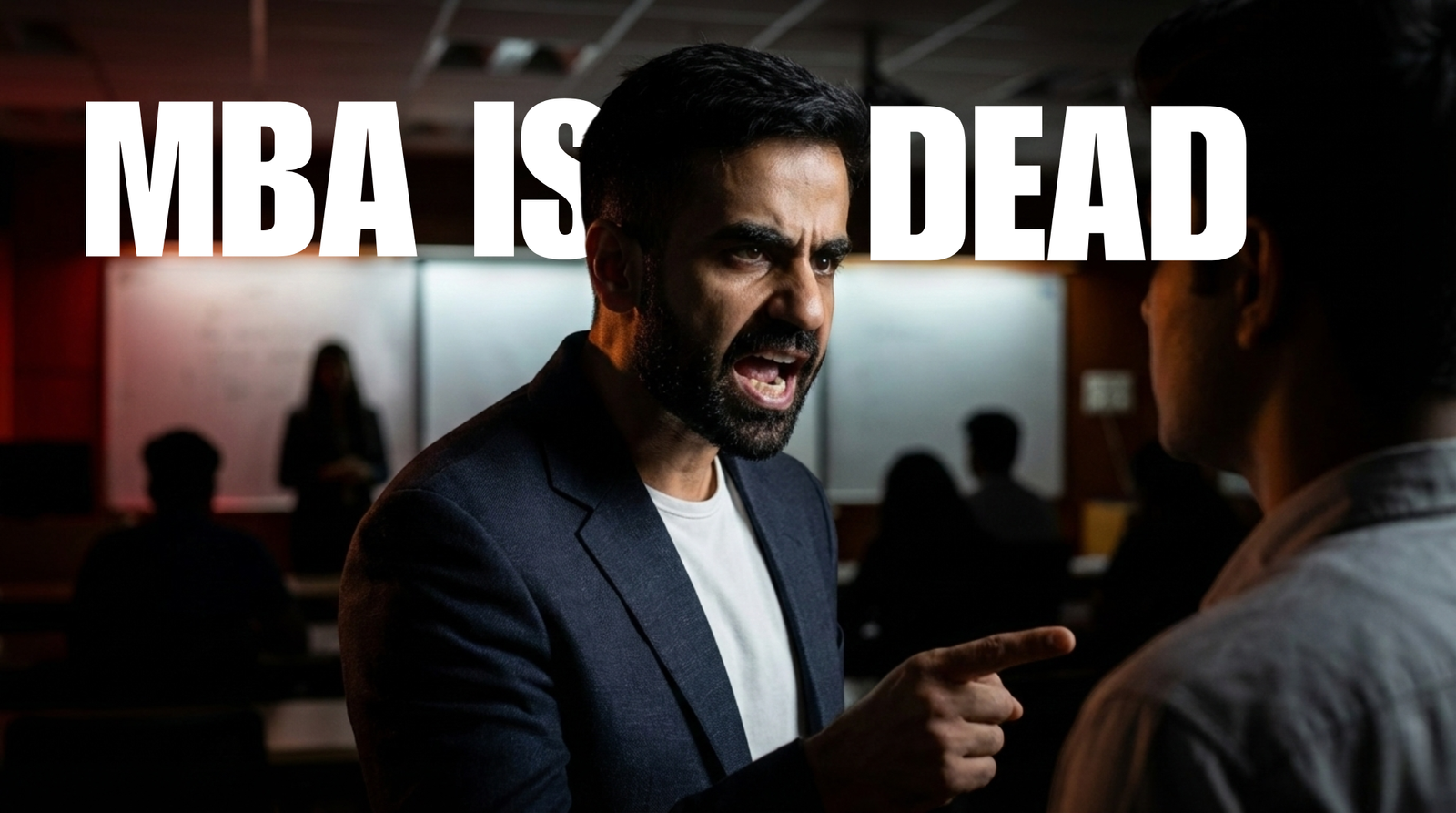
Let’s be honest, that line stings.
When Nikhil Kamath said, “you’re 25 and going to an MBA college today, you must be some kind of idiot,” he wasn’t trying to make friends. He reiterated the sentiment in a recent “Ask Me Anything” video on YouTube, making it clear this wasn’t just a passing comment. It’s a statement that’s worth a hard look.
That comment set off a massive debate about whether the classic MBA is still worth the paper it’s printed on in 2025. It’s a provocative take, for sure, but we shouldn’t just dismiss it. We need to look at the cold, hard numbers: the job stats, salary trends, and what companies actually want right now.
So, let’s break it down and see if the MBA is still a golden ticket or just an expensive relic.
The Fading Job Guarantee
It used to be that an MBA was basically a ticket to a guaranteed, high-paying job.
Those days seem to be over. The optimistic story we were all told is crumbling fast in 2025. The reality for new grads is grim, both here and abroad.
Take Harvard Business School, one of the most prestigious on the planet. In 2024, 23% of their MBA grads were still hunting for a job three months after graduation. That’s a huge jump from just 10% in 2022. If Harvard grads are struggling, it’s a bad sign for everyone else.
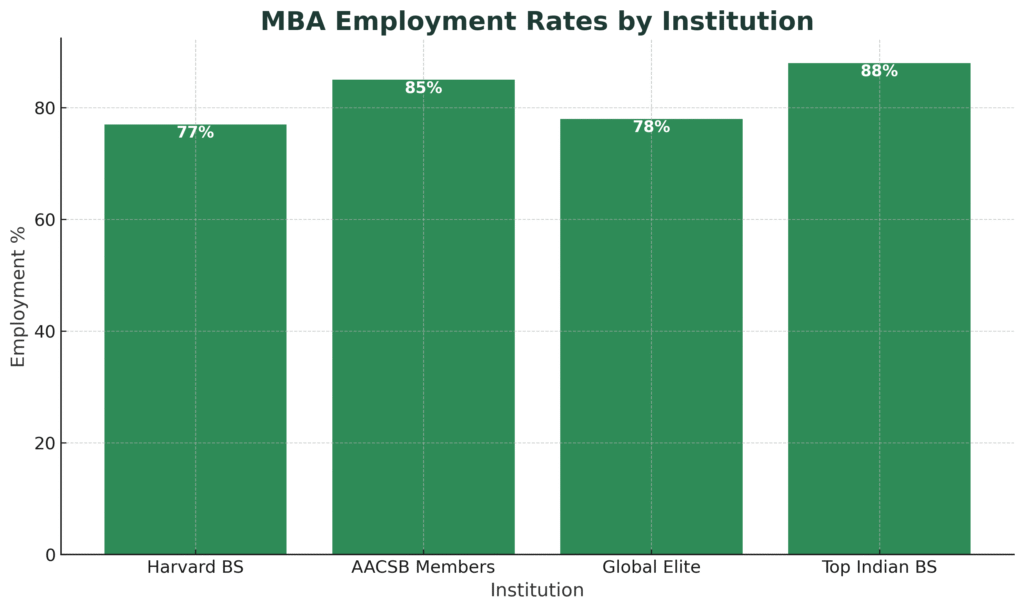
This isn’t just a Harvard problem. A global survey by AACSB, covering 317 business schools, found the 2024-25 employment rate dropped to 85% from 87.5% the year before. While that might not sound terrible, it still means about 1 in 7 grads are left hanging.
In India, the numbers are genuinely shocking.
According to Unstop’s 2025 Career Report, a full 50% of MBA graduates in India are unplaced. Half. That’s an unemployment rate that shatters the idea that an MBA means job security.
A big part of the problem is that the old-school hiring pipelines are drying up. Big tech players like Amazon, Google, and Microsoft just aren’t hiring as many MBAs; they want specialized tech talent instead. The same goes for big consulting firms like McKinsey and BCG, which have either frozen or cut back on MBA recruiting. That easy, guaranteed path is simply broken.
The Big Shift: What Companies Actually Want
This is perhaps the biggest piece of evidence for Kamath’s argument. The issue isn’t just fewer jobs; it’s that companies have completely changed their minds about what they’re looking for.
A 2025 survey of 1,000 U.S. hiring managers tells the whole story: 77% prioritize actual, provable skills over a credential, 69% will take work experience over formal education any day, and 25% of these companies are already dropping (or planning to drop) bachelor’s degree requirements. The degree just isn’t the gatekeeper it used to be.
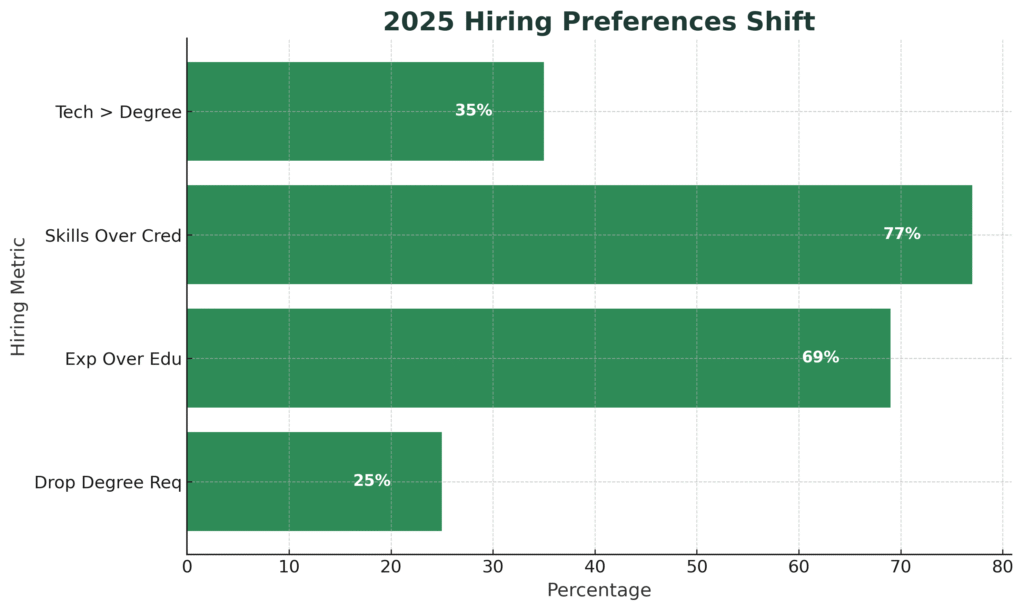
Think about what this means. The whole MBA pitch is “get this degree, get a better job.” But if employers are actively saying they care less about the degree and more about experience, that two-year, high-cost MBA suddenly looks like a bad bet.
At 25, you have a 40-plus-year career ahead. It’s worth comparing starting that career with 3-5 years of real, hands-on experience versus a fresh MBA and almost no practical know-how.
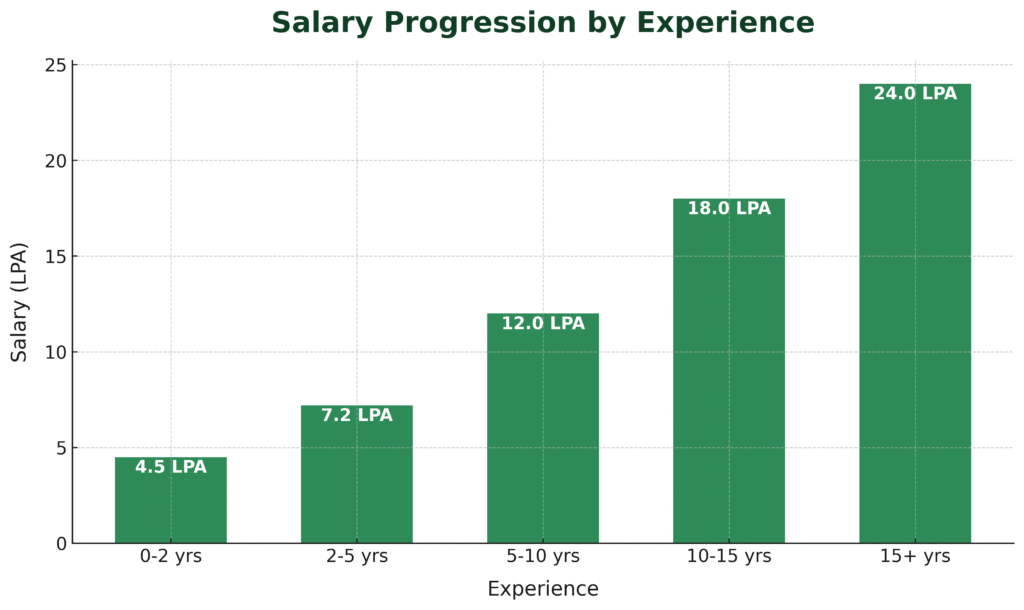
GMAC data shows an MBA grad with 3-6 years of prior experience earns 7-12 lakhs, while a fresher MBA gets 3.5-5 lakhs. That’s a 100% premium for having experience first. Suddenly, the “opportunity cost” of taking two years off for school looks massive.
The View from the Startup World
If you think you need an MBA to be a successful entrepreneur in India, the data says otherwise.
One study of 100 upcoming Indian startups (looking at 198 founders) found some fascinating results. Only 33% of the founders had an MBA, while a larger group, 41%, never bothered with any post-graduate degree at all.
That’s right: there are more successful founders without an MBA than with one.
The secret sauce wasn’t the degree; it was domain expertise and prior work experience. Half of these founders launched their company within 3 years of finishing their education, and 80% did it before turning 30. They built their success on professional experience in hot sectors like IT, consulting, or finance, not on a business school credential.
Frankly, Kamath himself is living proof. He built Zerodha without an MBA, and he isn’t just an outlier-he’s part of a pattern.
The Problem of Price
When you’re 25, you’re probably not sitting on a pile of cash. The price tag for an MBA is steep.
We’re not talking about government colleges, which can range from ₹50,000 to ₹3 lakhs. For a top private B-School, you’re looking at ₹10 to ₹35 lakhs. The big names like the IIMs are even more, around ₹22 to ₹30 lakhs.
Is the ROI Worth It?
The next question is whether the payoff justifies that cost.
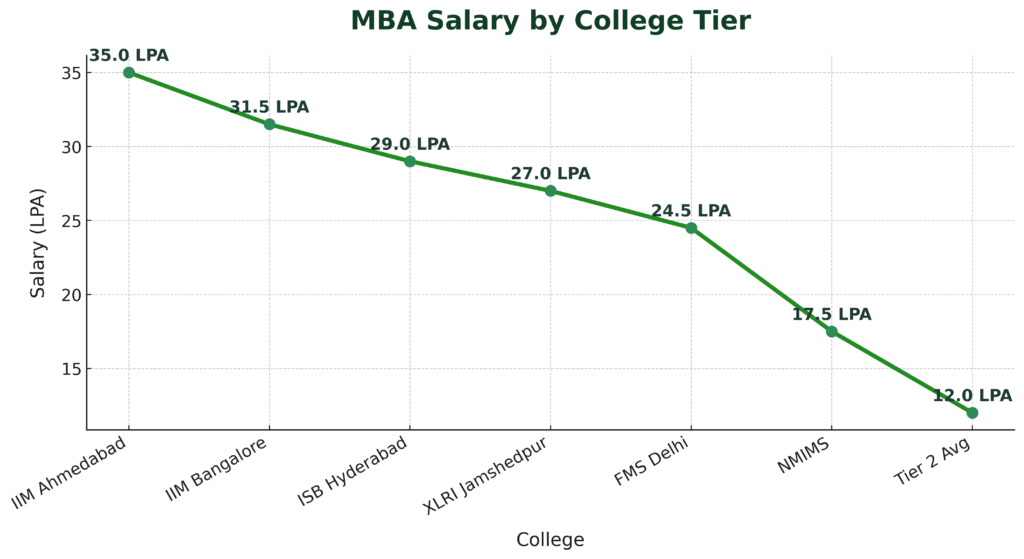
Sure, if you graduate from an IIM, you might average ₹30-35 LPA. But let’s be real: most people don’t go to an IIM. The vast majority of MBA programs don’t deliver that. A grad from a Tier 2 private college, for example, averages just 12 LPA. That’s barely more than a fresher engineer with decent skills in tech or finance.
The return on investment (ROI) gets questionable, fast.
A Bloomberg study on U.S. programs found the average annual ROI was about 12.7%. If you translate that to India, a ₹10 lakh investment might net you an extra 2-2.5 lakhs over an entire decade. You might do just as well, or better, by sticking that money in an index fund and not losing two years of salary.
Faster, Cheaper Alternatives
Here’s the other thing Kamath is right about: the MBA isn’t the only game in town anymore. A 25-year-old today has far better, more specialized options than sitting in a classroom for two years.
Consider these:
- Data Science Bootcamps: These take about 6 months, and the average starting salary is around 8 LPA. Placement rates are often over 85%.
- Product Management Certs: These take 3-4 months, and you’re looking at a starting salary of 9 LPA in one of tech’s hottest fields.
- CFA Charter: This is a beast (maybe 18 months of study), but you can do it while working. It’s globally recognized and lands you a starting salary around 10 LPA in finance.
All of these are cheaper, faster, and let you keep earning money. They target specific skills employers are actively begging for.
Just do the math. A 25-year-old could do a bootcamp, get a job, and by the time their friend graduates with an MBA, they could already have 3 years of experience and be earning 12-15 lakhs. The MBA grad, meanwhile, is just starting their job hunt.
When the MBA Still Makes Sense
Look, Kamath’s ‘idiot’ comment is great for a headline, but it does gloss over a few things. The MBA isn’t completely useless. It just has to be the right person, at the right time, and at the right school.
It still makes sense for a few people:
- The Elite School Folks: If you get into IIM Ahmedabad, ISB Hyderabad, or another top-tier school, it’s a different ballgame. The brand name, alumni network, and direct recruiting pipelines are real and valuable.
- The Career Pivoters: This is a big one. If you’re an engineer and you desperately want to be in investment banking, an MBA from a recognized school is one of the only structured ways to make that jump. It’s a reset button.
- The Experienced Pros: This is the most important point. The MBA is not for a 25-year-old; it’s for the 30-year-old with 5-6 years of experience who wants to move into an executive role. The data is clear: GMAC found that grads with 3-6 years of prior experience see an 83% jump in earnings compared to those who go straight from college.
It’s All About Timing
This really gets to the core of Kamath’s criticism: age 25.
At 25, you are just hitting your stride. You’re finally good at your job. You’re building skills, a network, and momentum. The data shows this is when your salary really starts to take off, jumping 32% between 2-5 years of experience and another 36% from 5-10 years.
It makes very little sense to stop all that momentum to go back to school. Taking an MBA at 25, especially with little to no work experience, wastes that crucial window and puts the whole value of the degree on shaky ground.
The data-backed, smarter path seems to be working your tail off from 25 to 30. Get deep, valuable experience in your field. Then, if you feel you’ve hit a ceiling, you can think about an MBA to break through to the next level.
The Final Verdict
Here in India, the job market is strange. We have a situation where 50% of MBA grads can’t find a job, yet companies are desperate to hire people with the right skills.
The problem isn’t a lack of jobs, but a “skills-credentialization gap.” Companies don’t care about your degree; they care about what you can do. They want tech skills, domain expertise, a portfolio of work, and real internship experience. A generic MBA doesn’t provide that.
So, back to Nikhil Kamath. The evidence suggests he was right.
For most 25-year-olds, stopping a career to get an MBA is just not the smart play anymore. The costs are high, the job market is brutal, and employers want experience, not another credential. The “work first, upskill later” strategy is simply more rational today.
But it’s not a black-and-white issue, and he definitely oversimplified it.
The MBA isn’t worthless. If you’re 25 and you got into IIM-A, or you have a very specific plan to pivot from chemical engineering to high finance, then it can still be a powerful tool.
What Kamath’s comment really captured is that the MBA’s golden age is over. It’s no longer a one-size-fits-all golden ticket. It has become a very specific, very expensive tool for a very specific set of problems.
And at 25, the odds are low that it’s the right tool for you. The data suggests patience, grinding for experience, and building real skills will get you a lot further.